Back to List
RLL Racing Stays Connected from Headquarters to Every Race with Peplink
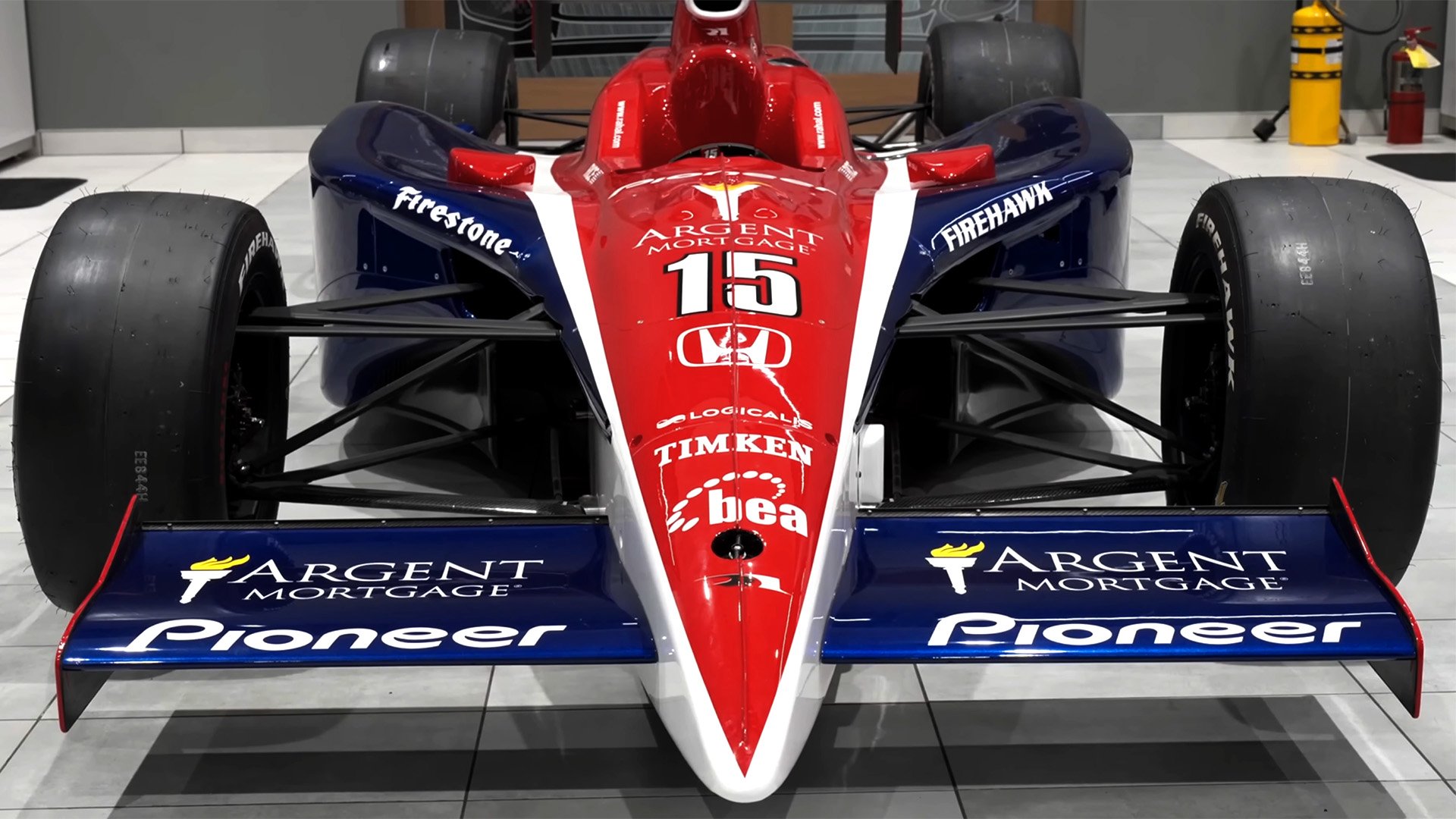
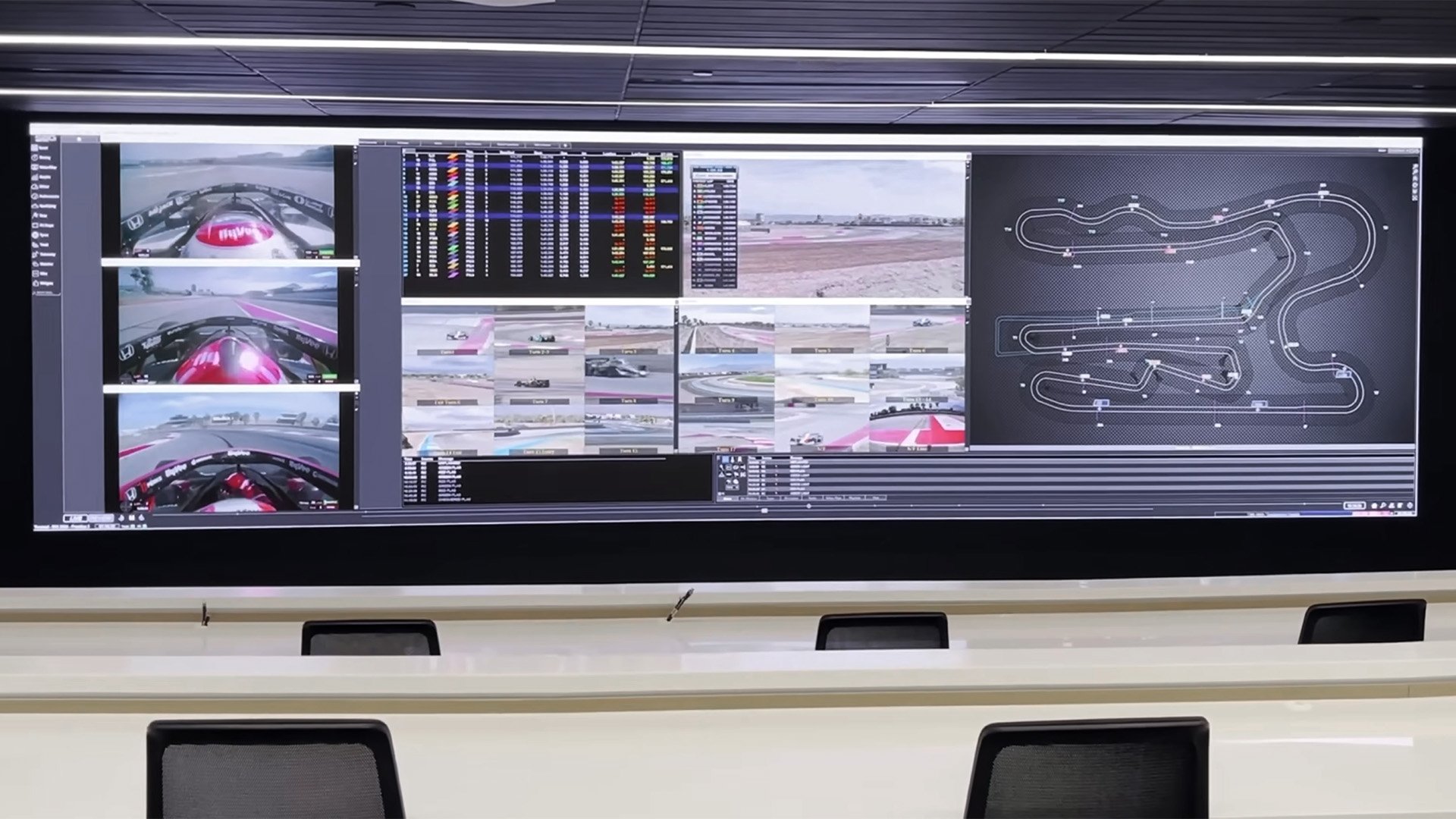
As a championship-winning INDYCAR and IMSA racing team, Rahal Letterman Lanigan (RLL) Racing relies on real-time data and video across its headquarters and trackside operations. Peplink provides the network backbone that connects these distributed locations as one unified network, regardless of the connectivity available at each race venue.
Summary
Organization
Rahal Letterman Lanigan Racing (INDYCAR and IMSA racing team)
Application
Real-time race telemetry and camera feed distribution between trackside and headquarters
Solution Provider
Crosstalk Mobile (Peplink reseller)
Peplink Deployment
Balance 1350 EC, 48 PoE 2.5G Switch, Balance 310X, BR2 Pro, BR1 Pro 5G, BR2 Pro, BR1 Pro 5G, AP Pro AX, InControl, and SpeedFusion
Project Scope
One core network at headquarters and portable network deployments across race-day locations
Outcome
18-hour network migration, reliable and portable connectivity across every race location, and $80,000 saved over three years

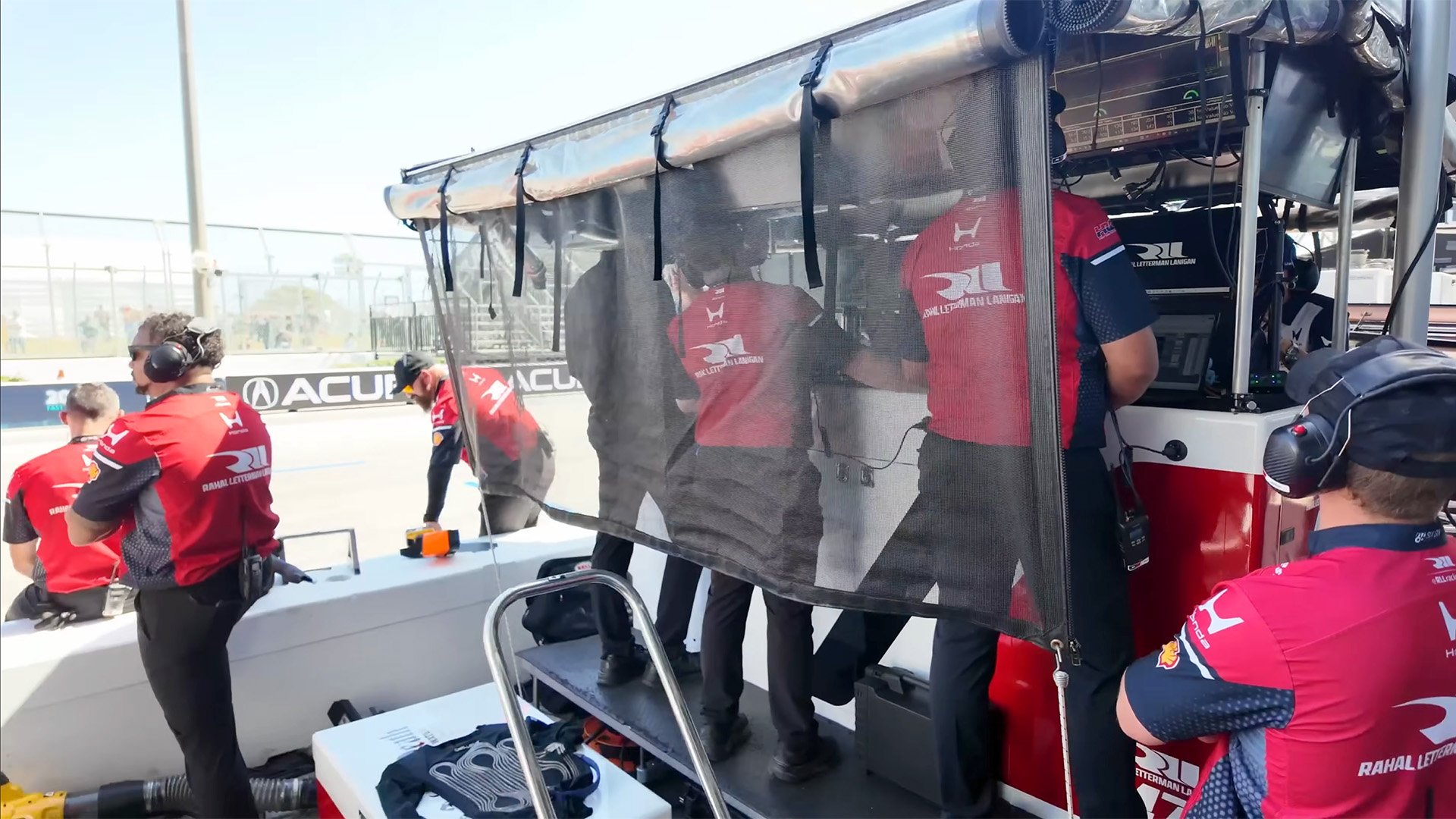
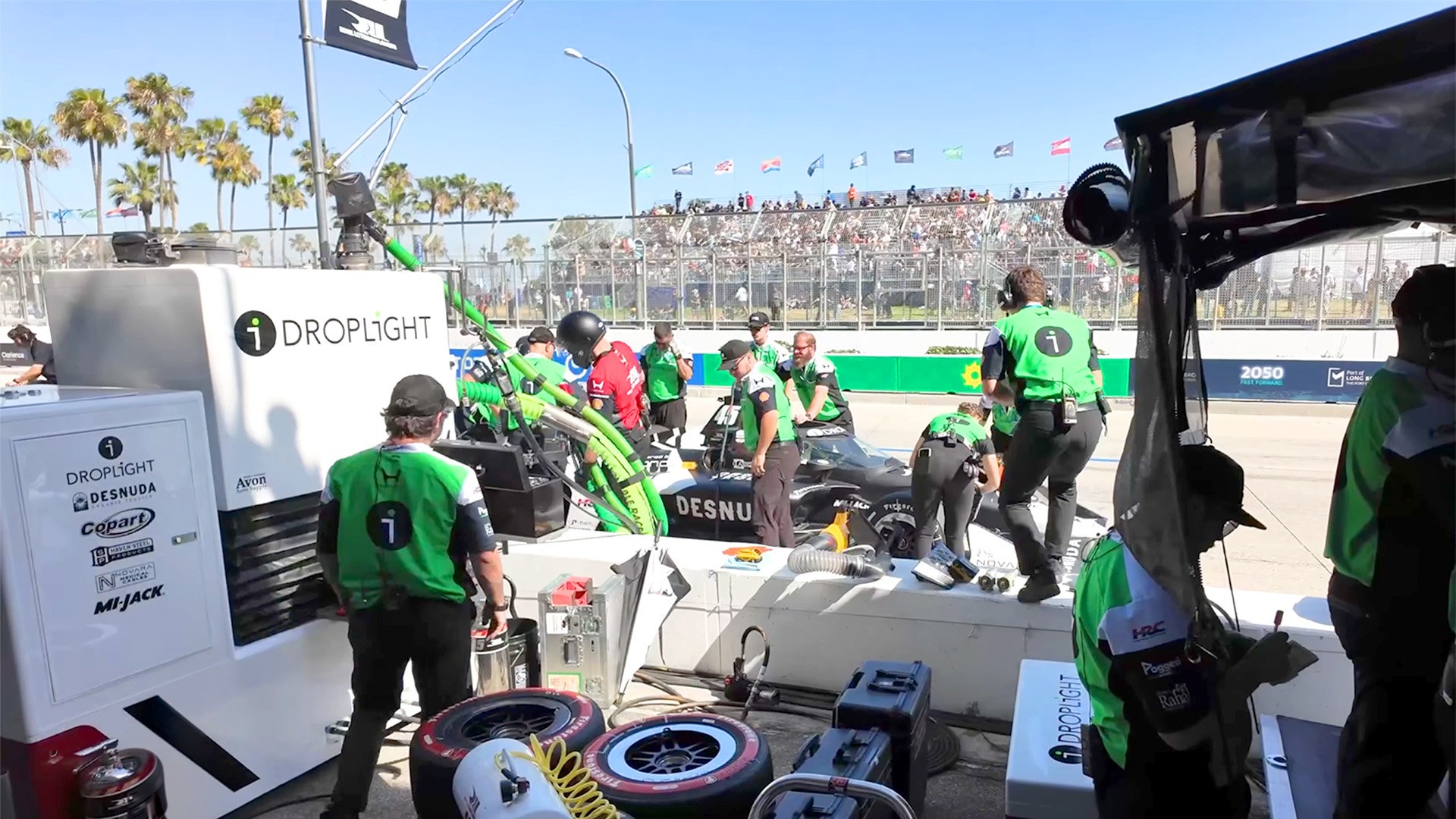
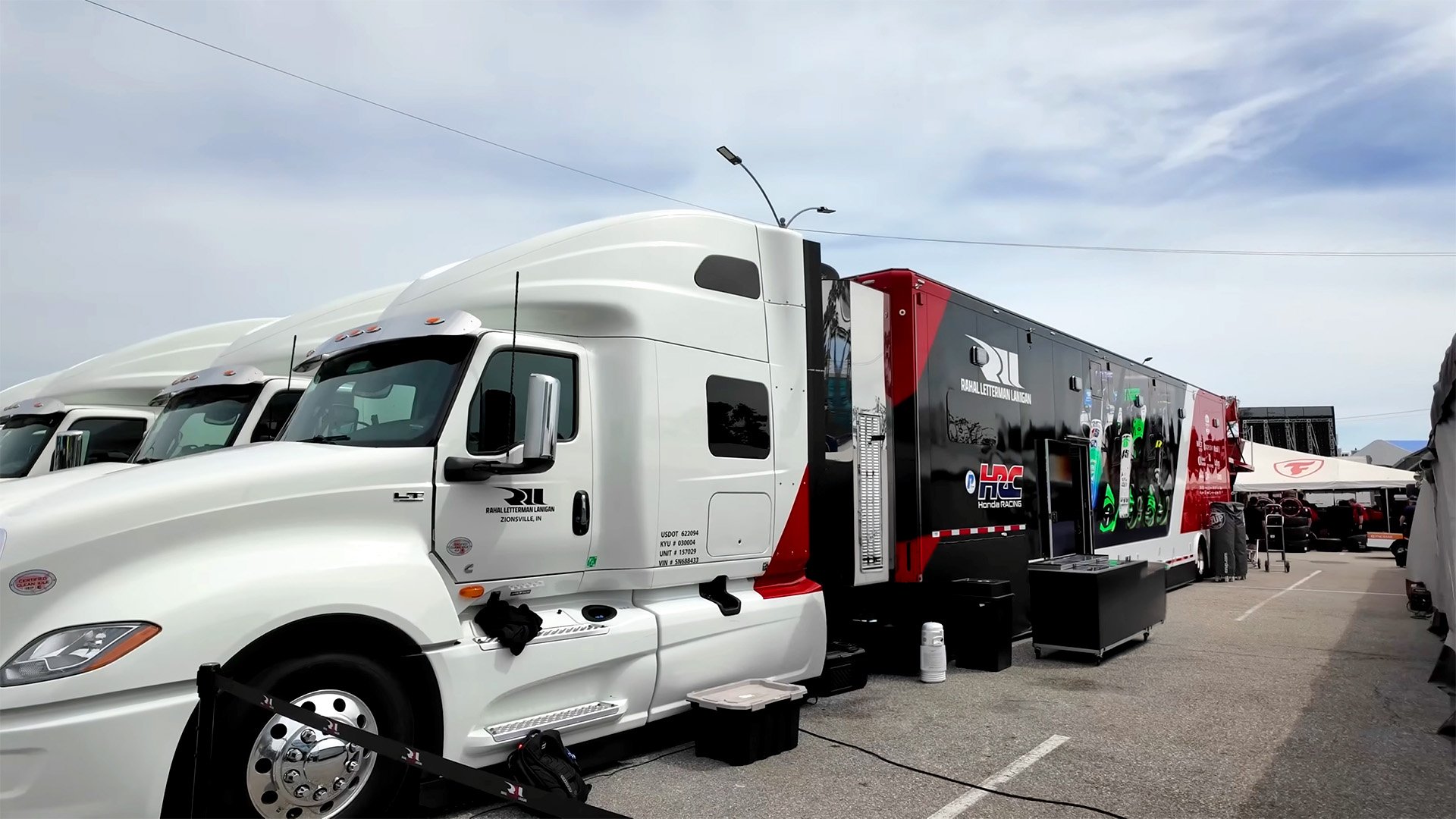
RLL Racing operates across a complex network of engineering trucks, timing stands, fuel rigs, viewing areas, and its Indianapolis headquarters. At every race, these locations need to share telemetry, race data, and live video to keep engineers and strategists informed of what’s happening on track in real time.
However, every race venue can offer a different mix of connectivity, from dedicated fiber to Starlink, cellular, or Wi-Fi. At the same time, the team was facing a costly licensing renewal for its aging network infrastructure. To address both challenges, Crosstalk Mobile deployed Peplink to build a portable network that could function as one wherever the team raced.
The Challenge
One High-Performance Network. Every Race. No Two Alike.
RLL’s race operations run on a constant stream of critical live information. The network behind them needs to deliver enough bandwidth and stability to keep that information flowing in real time, with zero tolerance for dropped connections.
But the network itself has to move. From one race to the next, RLL packs up its equipment and redeploys at a new venue, where the available connectivity may be completely different. Yet headquarters and every trackside location still need to function as one network.
And there was a practical constraint: replacing the aging infrastructure could not mean a prolonged outage or another costly commitment. With the existing platform estimated at $130,000 over three years, RLL needed a faster, more cost-effective way to make the switch.
The Solution
Bridging Every Location with SpeedFusion
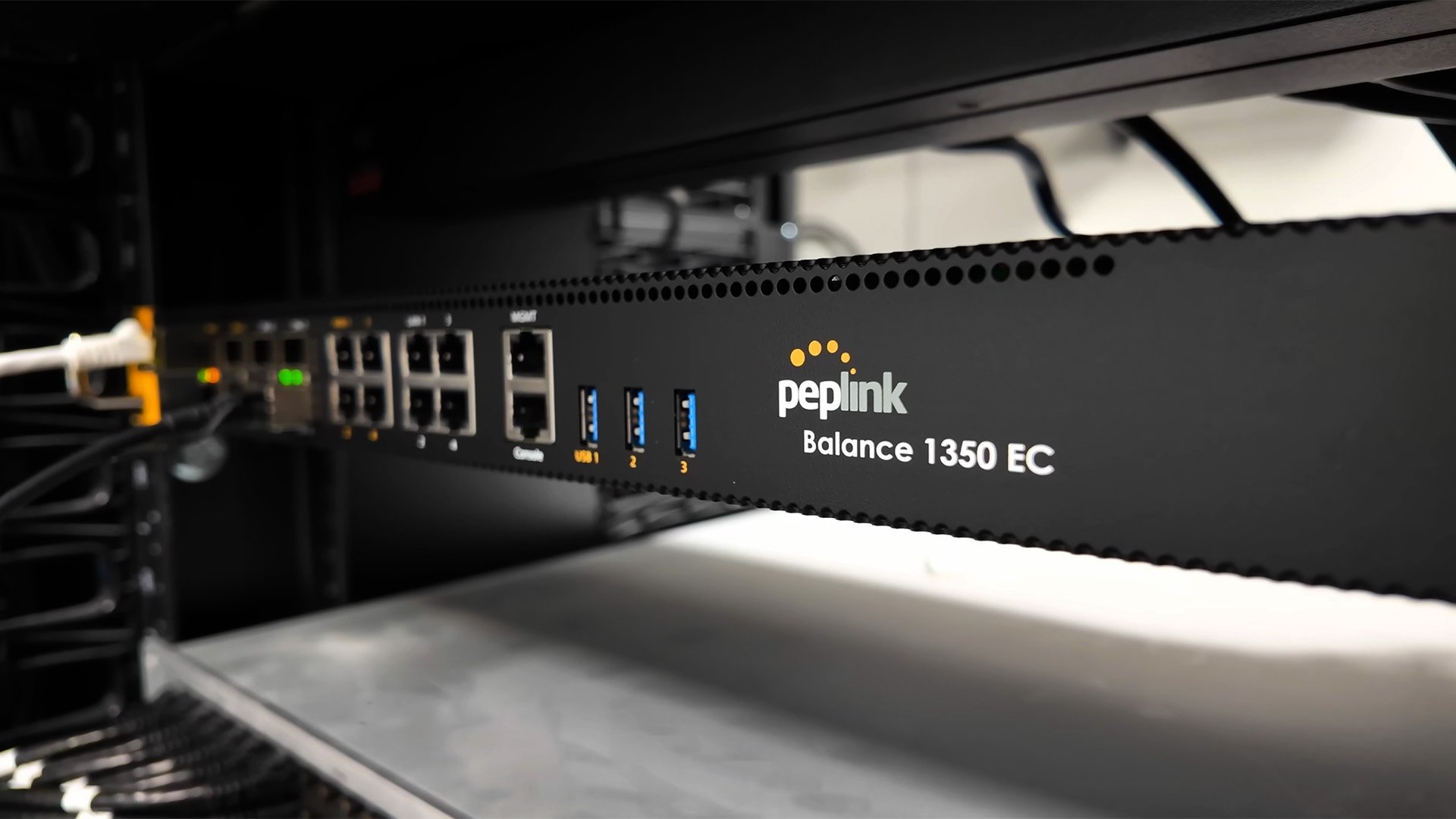
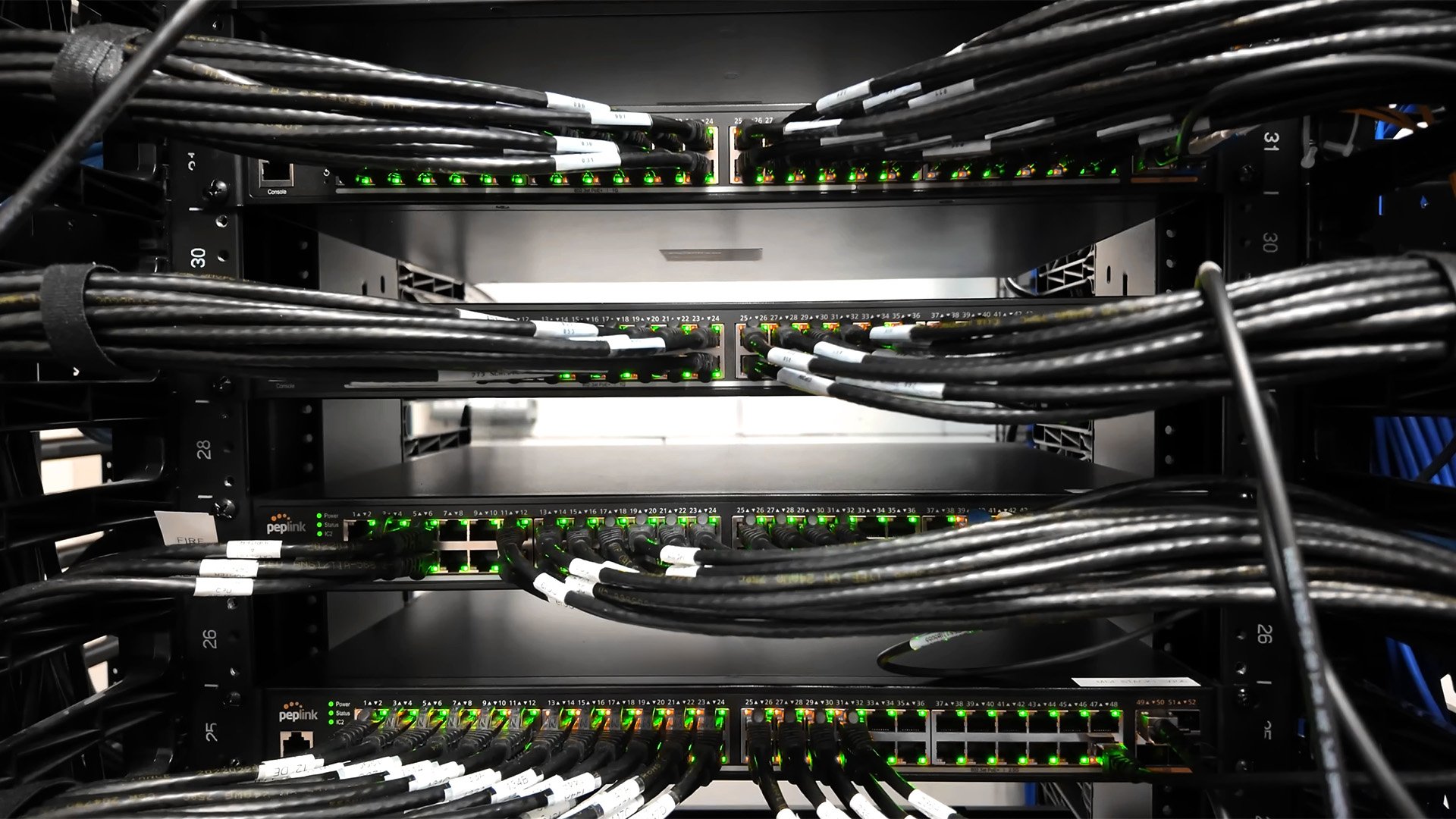
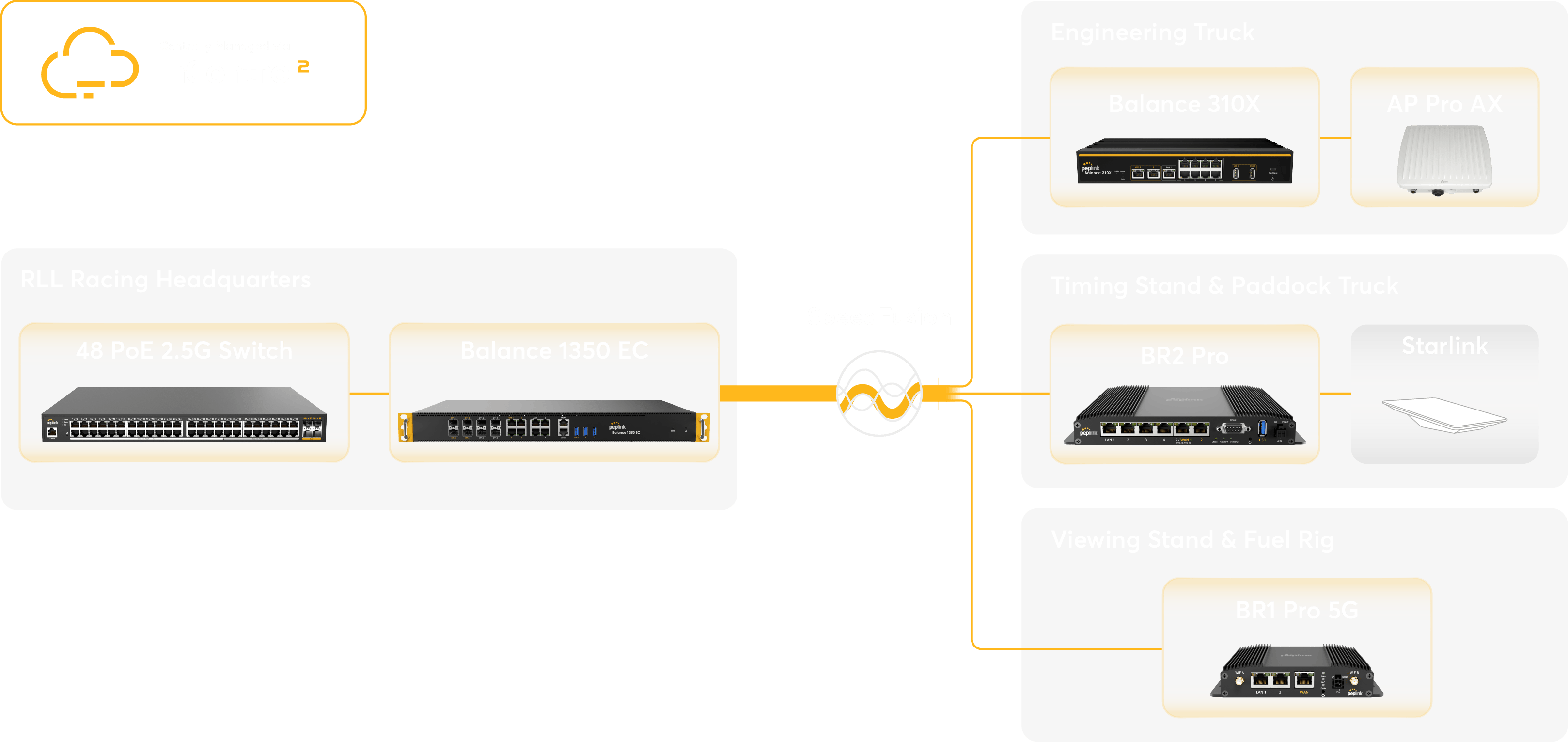
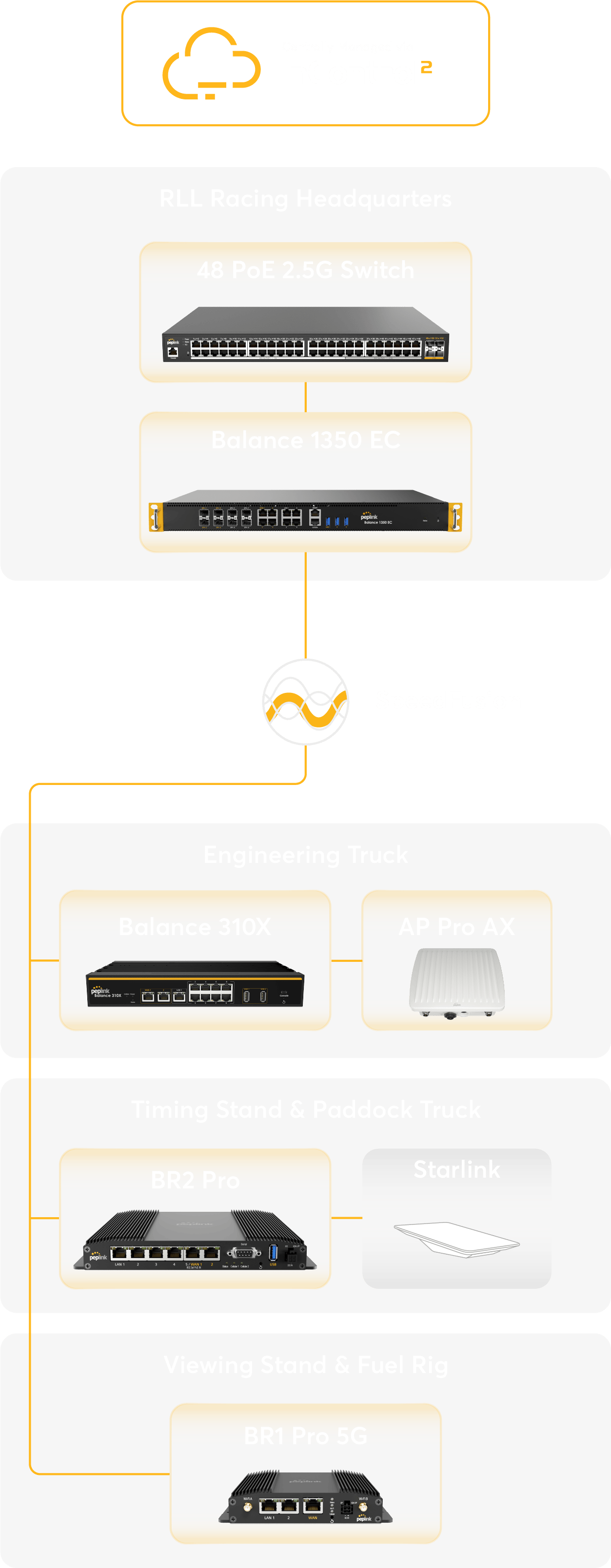
Crosstalk Mobile replaced RLL’s aging headquarters core with a Peplink-based network, centered on a Balance 1350 EC and 48-port PoE 2.5G switches. The migration was completed in an 18-hour overnight session, minimizing disruption to RLL’s operations.
Trackside, each location is equipped according to its specific requirements and available connectivity. Balance 310X routers support RLL's engineering trucks, paired with AP Pro AX access points, while BR2 Pro routers connect the drivers' lounge, executive office, IT and marketing trucks, and timing stand. A BR1 Pro 5G serves the viewing stand and fuel rig.
SpeedFusion tunnels were established between headquarters and each location, allowing RLL to bond fiber, Starlink, 5G, and Wi-Fi as WAN for faster, more reliable connectivity, while Layer 2 bridging kept the distributed locations operating as one unified network.
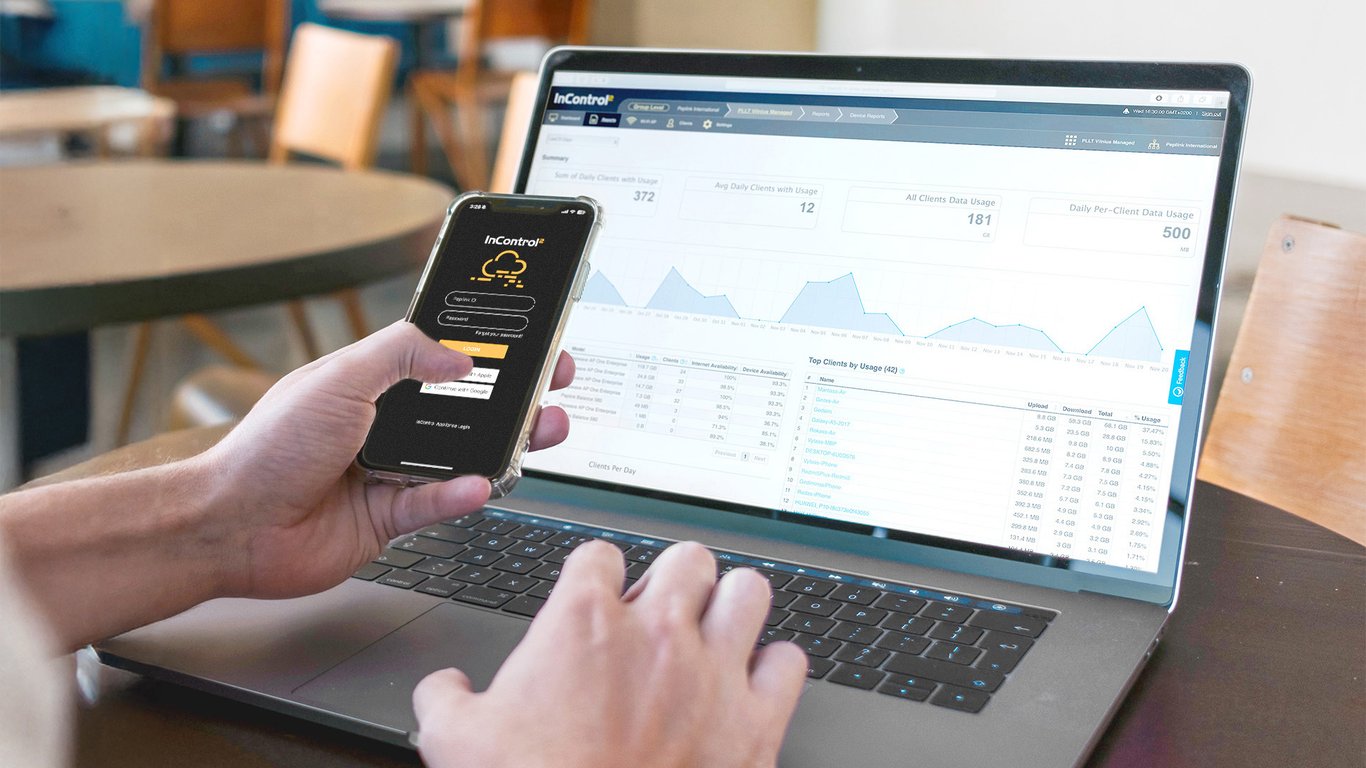
InControl provides centralized visibility and management, allowing RLL to remotely configure and monitor its distributed network from a single dashboard. The same setup can then be packed up, redeployed, and brought online at the next race without rebuilding the network from scratch.
The Result
An 18-Hour Migration, $80,000 Saved, and a Network Ready for Every Race and the Future
RLL’s move to Peplink saved approximately $80,000 over three years compared with renewing and replacing its legacy infrastructure. The headquarters migration was completed in an 18-hour overnight session, allowing RLL to transition to the new network without disrupting day-to-day operations.
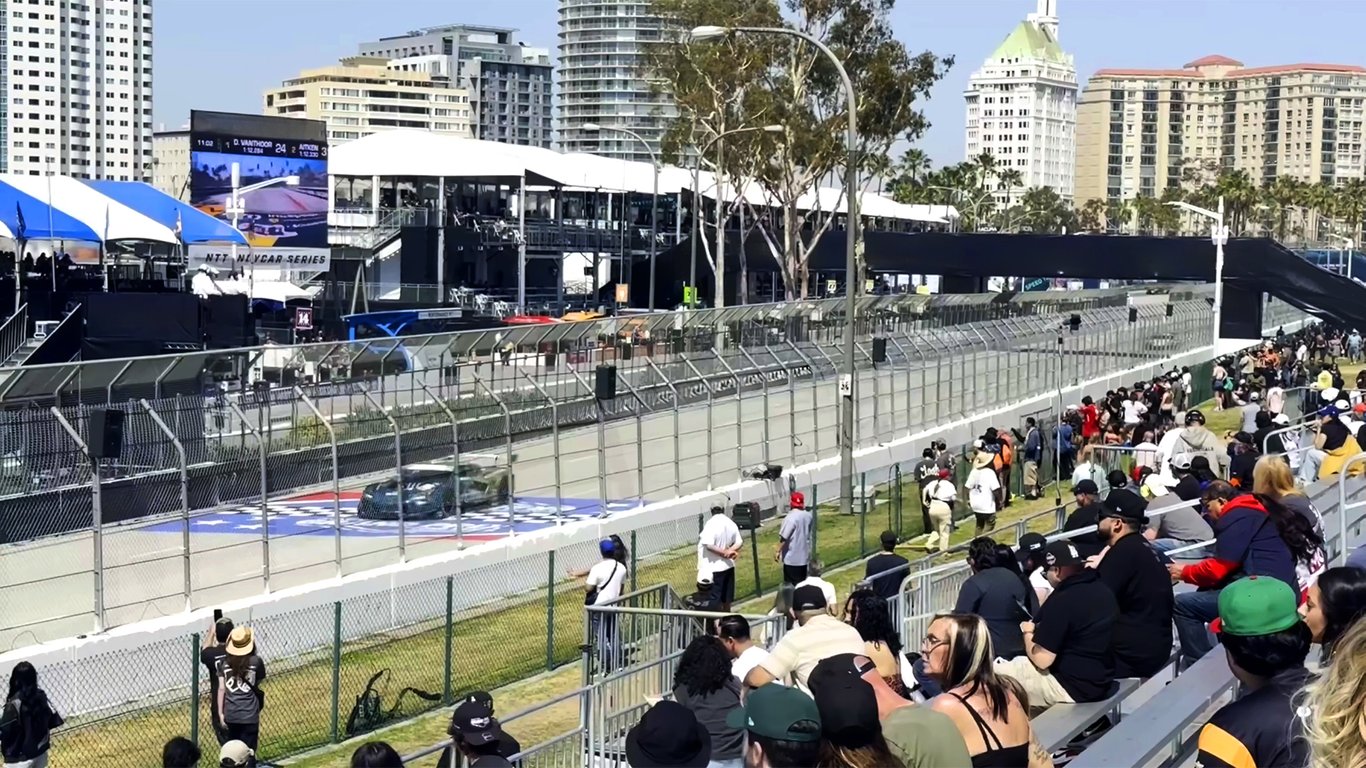
The network was tested live at the Long Beach Grand Prix, a street circuit with limited built-out infrastructure. In an active paddock, with moving vehicles and teams hauling heavy equipment throughout the weekend, fiber lines get cut often enough that areas could previously go offline for the rest of the race. With fiber now bonded to cellular connectivity and Starlink available for seamless failover, a cut line no longer takes a location offline. Feeds stay live and data keeps flowing, validating SpeedFusion's resilience under real conditions.
The setup now travels with RLL from race to race, with distributed locations brought online over whatever connectivity is available at each venue. RLL is also continuing the transition away from its legacy infrastructure, with remaining access points being phased out in favor of Peplink’s AP Series.
Testimonials
Every single piece that I would expect to work really has. We can always build onto it, but this is a rock solid foundation to build for the future.
Andrew Hughes
Layer 2 bridging reliably in real time over a bonded mix of fiber, 5G, Starlink, and Wi-Fi that's different at every location and prone to failure. That's where SpeedFusion pulls ahead and that's the part other vendors can't keep up with.
Chris Sherwood
Deployment Architecture
Featured Products
Balance 1350 EC
-
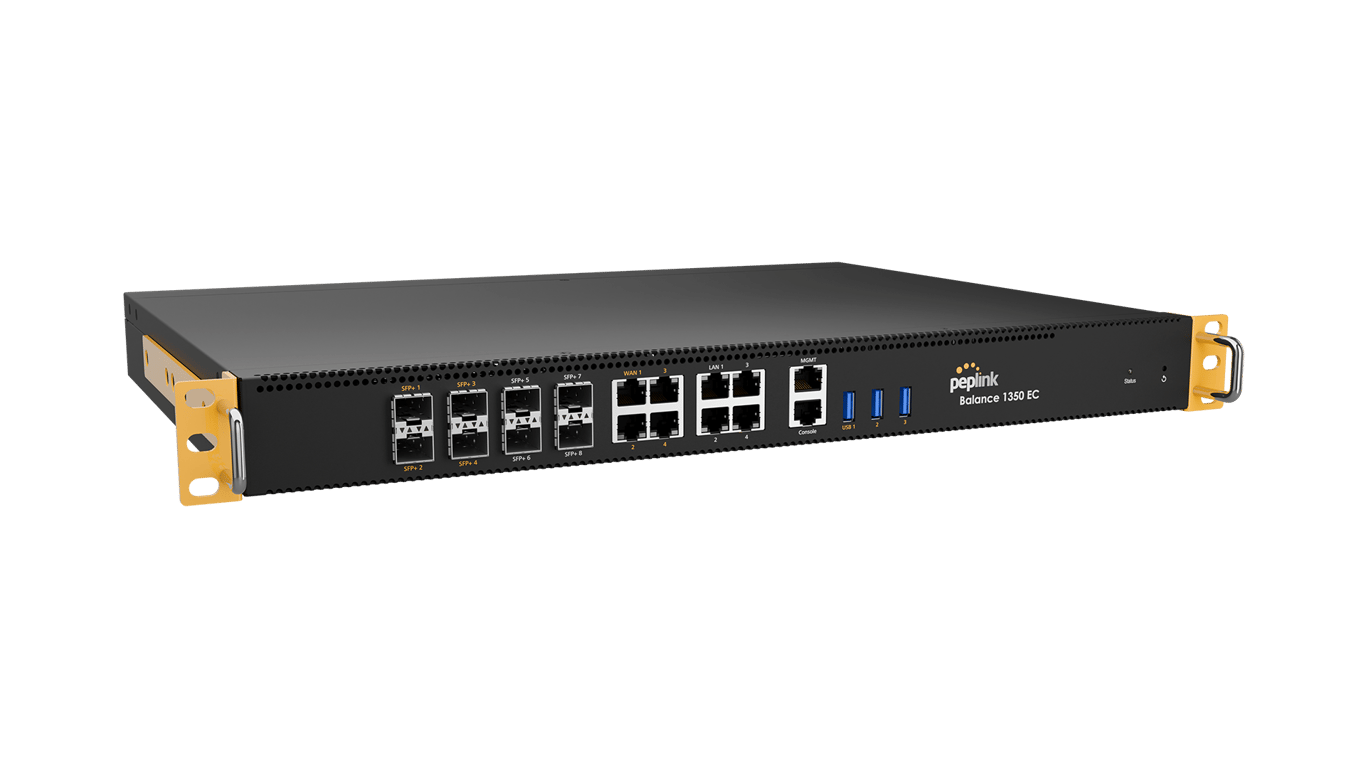
Used to replace aging core network at headquarters
-
Handles 2 Gbps SpeedFusion VPN throughput and 800 peers, covering every truck and stand
-
Dual hot-swappable power supplies keep the network up if one supply fails
Switch Series
-
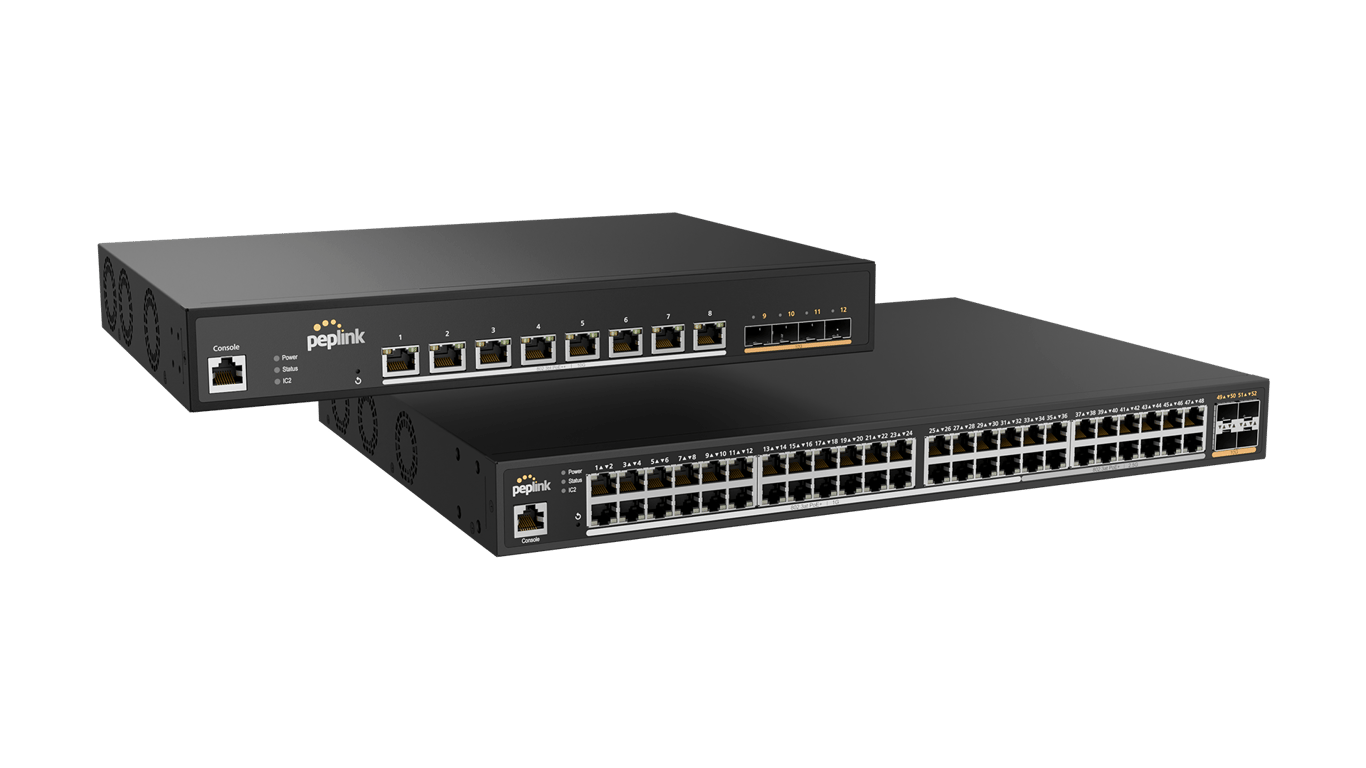
Added to core network racks to replace legacy switches
-
Deployed in engineering trucks and stands to power on-site peripherals
-
Runs 1 or 2.5 Gbps on select ports, suited for access control or more demanding devices
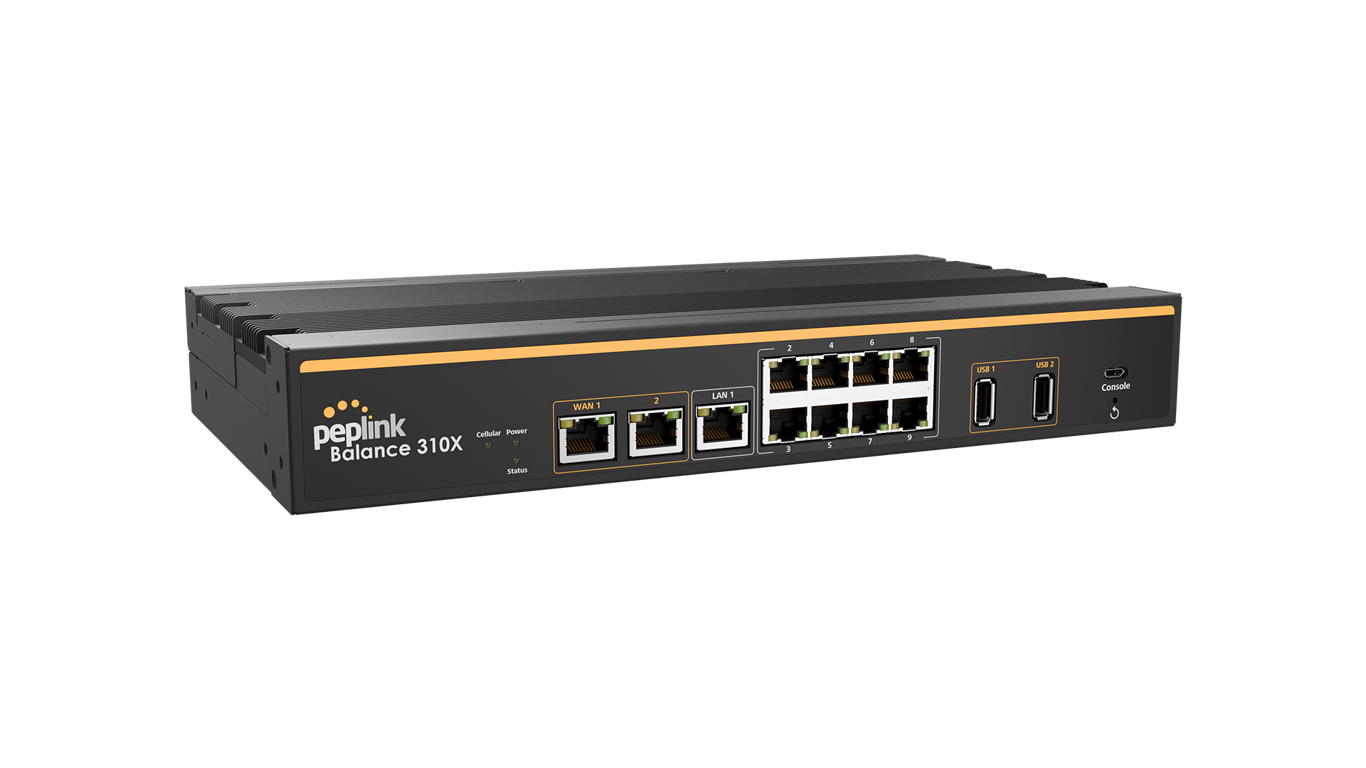
Balance 310X
-
Deployed as the main router inside each engineering truck at the track
-
Connects to a switch and the AP Pro AX for outdoor antenna coverage
-
Rugged, fanless design that operates through heat and vibration
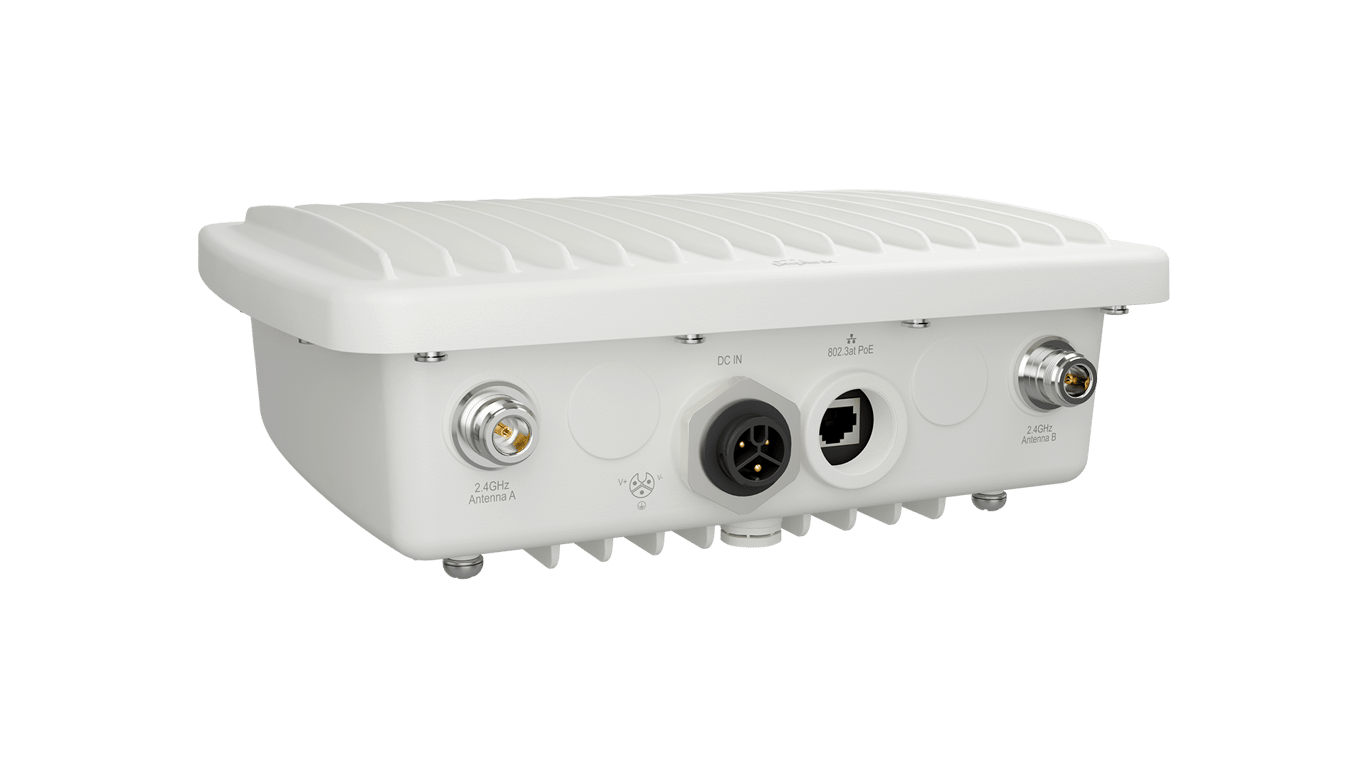
AP Pro AX
-
Paired with the engineering truck's Balance 310X router
-
Extends wireless coverage from the truck across the surrounding paddock area
-
Rugged and waterproof housing built to sit outside at any track
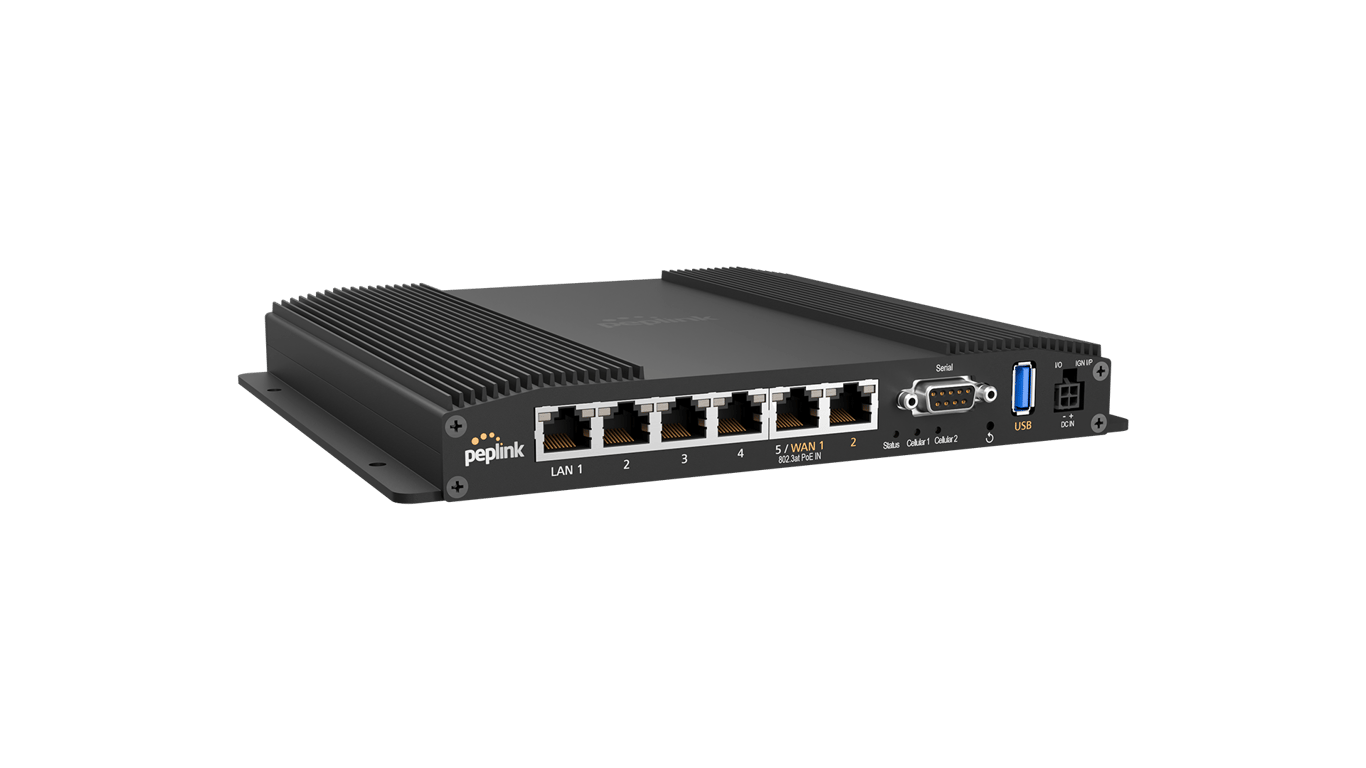
BR2 Pro
-
Deployed to the timing stand and other paddock trucks
-
Runs on a dedicated Starlink while still joining the same shared network
-
Built with dual embedded 5G modems enabling cellular redundancy
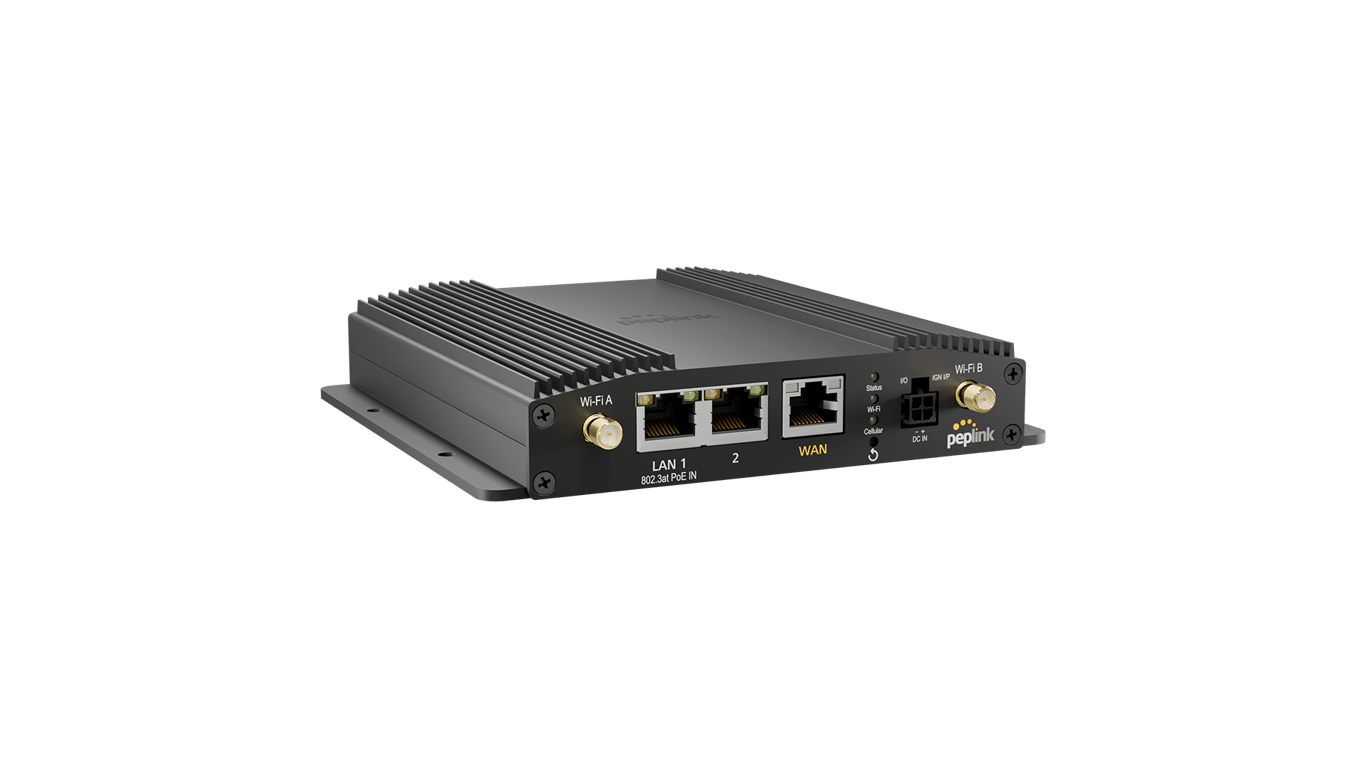
BR1 Pro 5G
-
Provided at the viewing stand and fuel rig
-
Pulls Wi-Fi as WAN from nearby timing stand
-
Compact form-factor for smaller-footprint race-day locations
InControl - Cloud Management
-
Accessed through PrimeCare, bundled licensing and warranty subscription
-
Gives RLL one dashboard to configure every device for any location
-
Removes the need for a technical team to configure each router on-site
SpeedFusion Technology
-
Establishes tunnels linking every location back to headquarters
-
Bonds or fails over between fiber, 5G, Starlink, and Wi-Fi for a reliable network
-
Keeps every location on one shared Layer 2 network, no matter its physical connection
FAQs
Q1. How does Peplink support racing connectivity?
A.
Races generate a constant stream of data, including telemetry and video feeds, that teams depend on in real time. While dedicated fiber may be available at some tracks, these connections can still be interrupted as teams move vehicles and equipment around the circuit.
Peplink supports multi-WAN connectivity across wired and wireless options, including fiber, 5G, Starlink, and Wi-Fi as WAN, giving teams multiple paths for resilient connectivity. SpeedFusion's Bandwidth Bonding combines available connections to provide the bandwidth needed for data-intensive applications such as telemetry and streaming, while Hot Failover automatically switches to a backup connection when a primary link is interrupted. This keeps engineers, race strategists, and crews connected in real time, wherever they race.
Q2. How can multiple Peplink devices be managed across different locations?
A.
InControl, Peplink's cloud-based endpoint management system, brings every device together on one platform for centralized configuration and management. For RLL, they can monitor each Peplink device from headquarters regardless of location without needing a technical team member to configure each router individually on-site.
Q3. What connections can be used with Peplink devices?
A.
It depends on the router model. Peplink devices can run on fiber, 5G cellular, Starlink, or Wi-Fi as WAN, pulling connectivity from another location's signal when hardwiring isn't practical. However, cellular support depends on whether a given model has an embedded modem. SpeedFusion can bond multiple connections together, or fail over between them, so a single dropped connection doesn't interrupt the flow of race data.
Q4. Can Peplink hardware be used outdoors, like for trackside environments?
A.
Yes. Peplink offers outdoor-rated products suited for exposure to weather, vibration, and temperature changes. In Crosstalk Mobile’s deployment for RLL, that includes the AP Pro AX, a rugged, waterproof outdoor access point paired with the engineering truck's Balance 310X, alongside compact, road-ready routers like the BR2 Pro and BR1 Pro 5G built to travel and deploy quickly at a new venue every race weekend.
Q5. What Peplink products are recommended for racing or live event connectivity?
A.
This may depend on the location or role, and how many connections it needs to stay redundant. A fixed core, like a team's headquarters, calls for a high-capacity router such as the Balance 1350 EC paired with standard switching, while trackside locations need something built to travel. For RLL, a variety of routers, from the Balance 310X in engineering trucks to the BR2 Pro and BR1 Pro 5G at timing stands, viewing stands, and fuel rigs, was carefully selected for each location's role and connectivity needs, with everything tied together over SpeedFusion and centrally managed through InControl.
Explore other real-world Peplink deployments, from helping UGent Racing stay connected during competition to keeping motorsports livestreams running smoothly for teams like Subaru Motorsports USA.
Next Steps

Looking for a Connectivity Solution?
Whether you're planning an event, a remote deployment, or a complex network, our team can help you find the right Peplink setup for the job.
Talk to a Specialist

Got a Peplink Deployment Story?
If you've built something impressive with Peplink, we want to hear about it. Share your project with us and we'll help turn it into a case study.
Share Your Story