Summary
The Challenge
The Solution
The Result
Testimonials
Deployment Architecture
Featured Products
FAQs
Next Steps
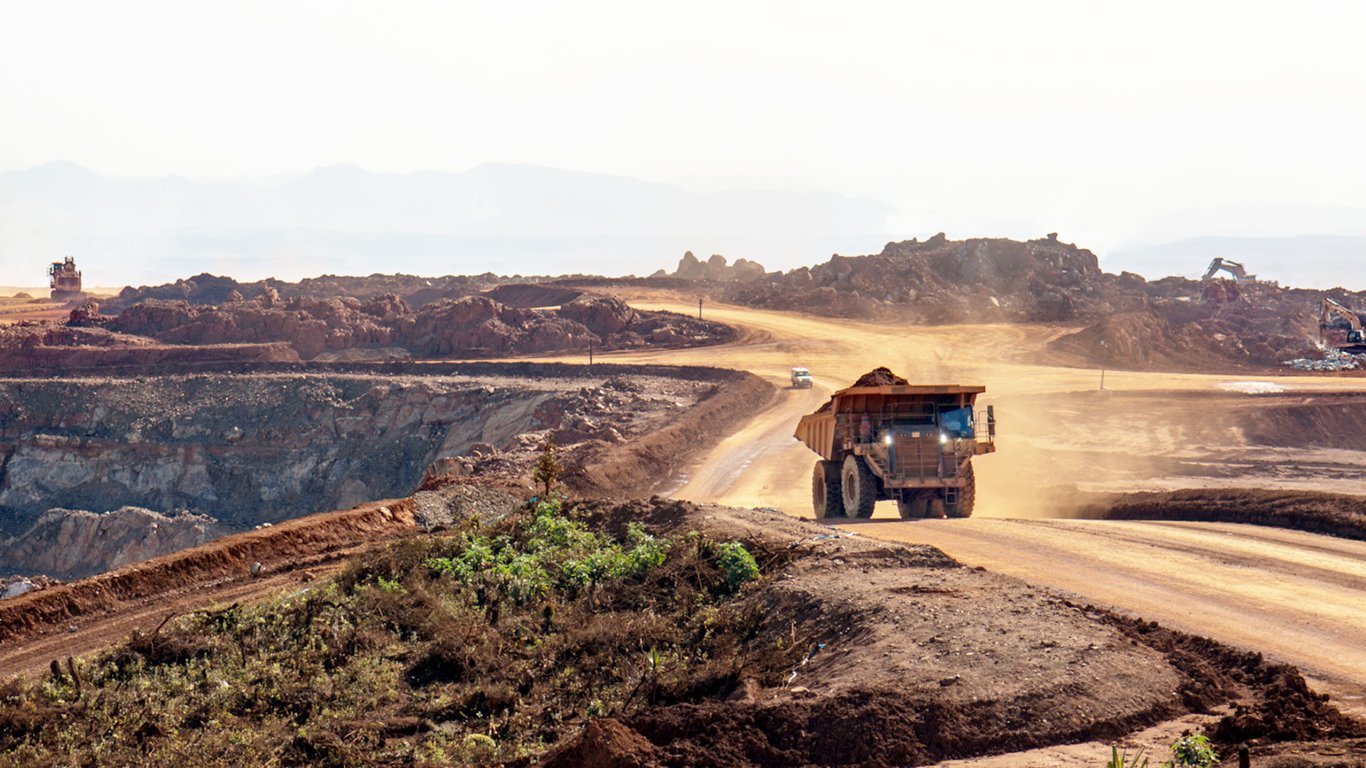
Mining haul truck at Heathgate Resources' remote uranium mine site in South Australia.

Back to List

Mining haul truck at Heathgate Resources' remote uranium mine site in South Australia.

Satellite Connectivity for Mining Sites: How Heathgate Stayed Online When Fire Hit Its Primary Link

A remote mine runs on its connection. Safety systems, daily operations, and the workers living on site all depend on it. Heathgate Resources used Peplink SpeedFusion to bond eight Starlink connections into satellite connectivity for mining sites that holds up when the primary link fails. When fire damaged the mine's microwave tower, the site kept running.

Summary

Organization

Heathgate Resources (uranium mining & processing)

Application

Primary-grade backup connectivity for a remote mine site, covering operations, safety systems, and workforce welfare

Solution Provider

MIMP Connecting Solutions (Peplink Reseller), with M2M Connectivity (Peplink Distributor) and Vocus (Satellite Provider)

Peplink Deployment

EPX, FusionHub, SpeedFusion, and InControl

Project Scope

Eight Starlinks bonded into one connection at the Beverley site, 650 km from Adelaide

Outcome

Up to 1.3 Gbps down / 250 Mbps up, and zero connectivity loss for 250+ workers when fire damaged the primary microwave tower

Heathgate Resources Logo.
Heathgate Resources mines and processes uranium in remote South Australia, using in-situ recovery at its Four Mile, Beverley, and Beverley North mines. Its Beverley site sits 650 km from Adelaide and supports more than 250 workers on rotation.
Keeping a site remotely connected takes more than one link. That's why Heathgate relies on Peplink, deployed by MIMP Connecting Solutions with M2M Connectivity and Vocus, to keep the mine online when its primary link fails.

The Challenge

One Microwave Link and a 2 Mbps Safety Net

The Beverley site ran on a single microwave link. If it failed, the only backup was a 2 Mbps satellite connection.
That backup was enough for safety and essential operations, and little else. Everyday business traffic had to wait until the microwave link came back. Workers on site also lost their main way to stay in touch with family and friends.
Heathgate needed a backup strong enough to carry the whole site, operations and people, for as long as the primary link was down.

The Solution

A Single Bonded Connection Across Eight Starlinks

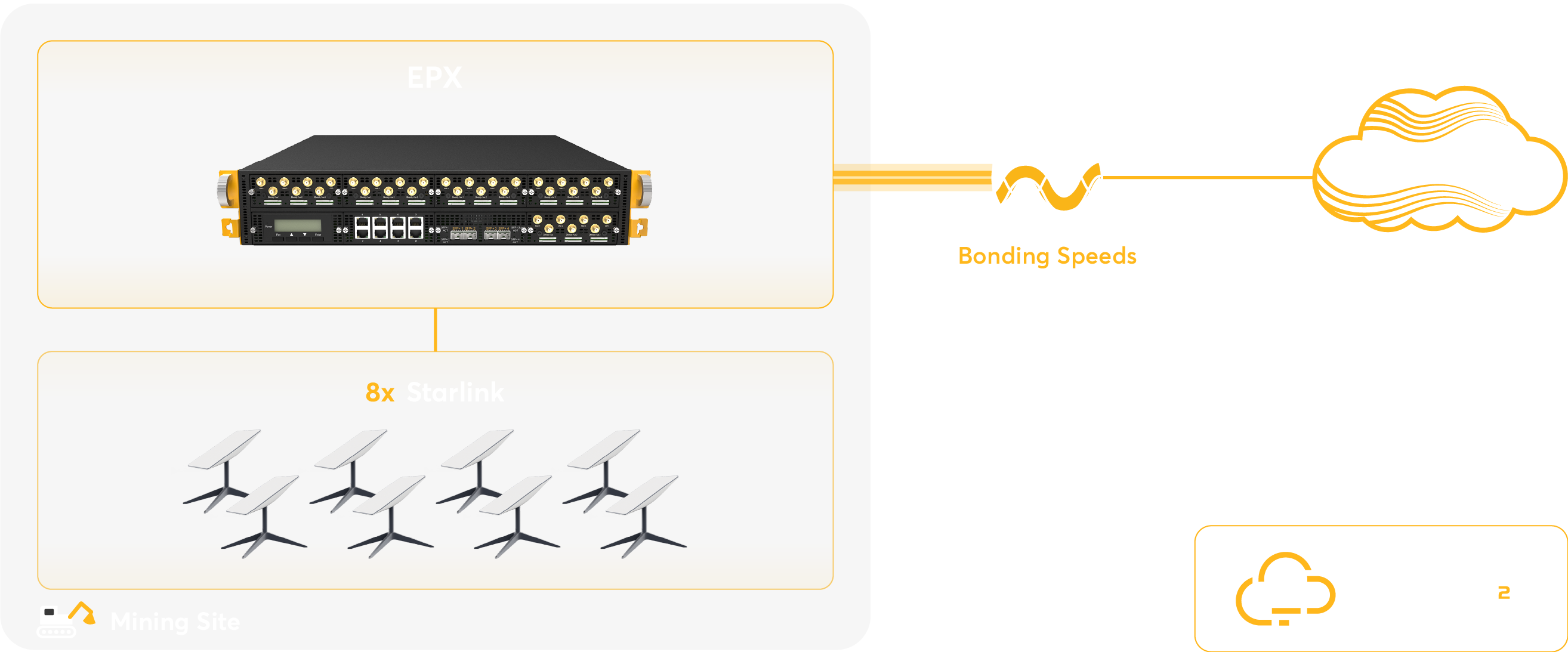
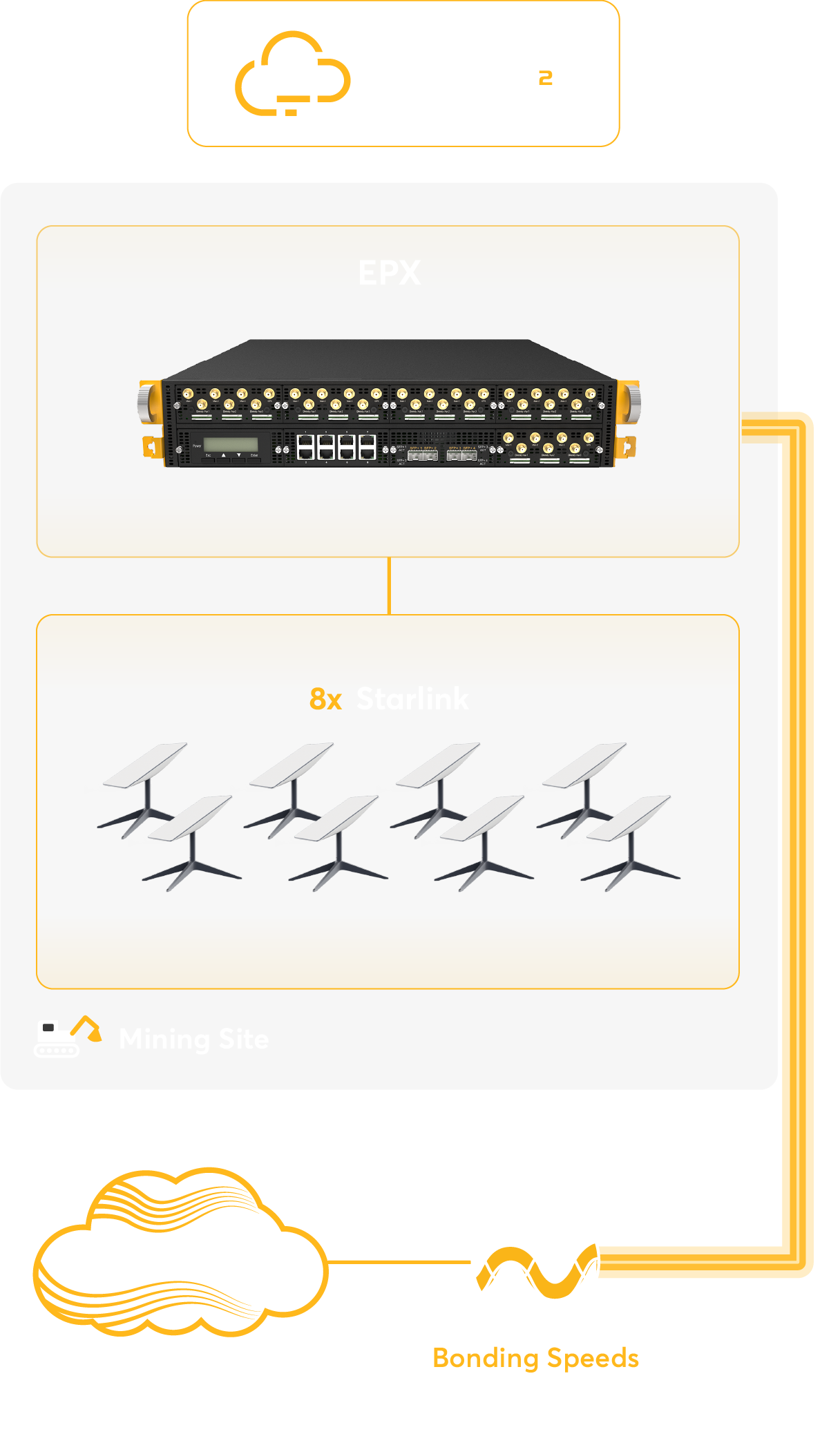
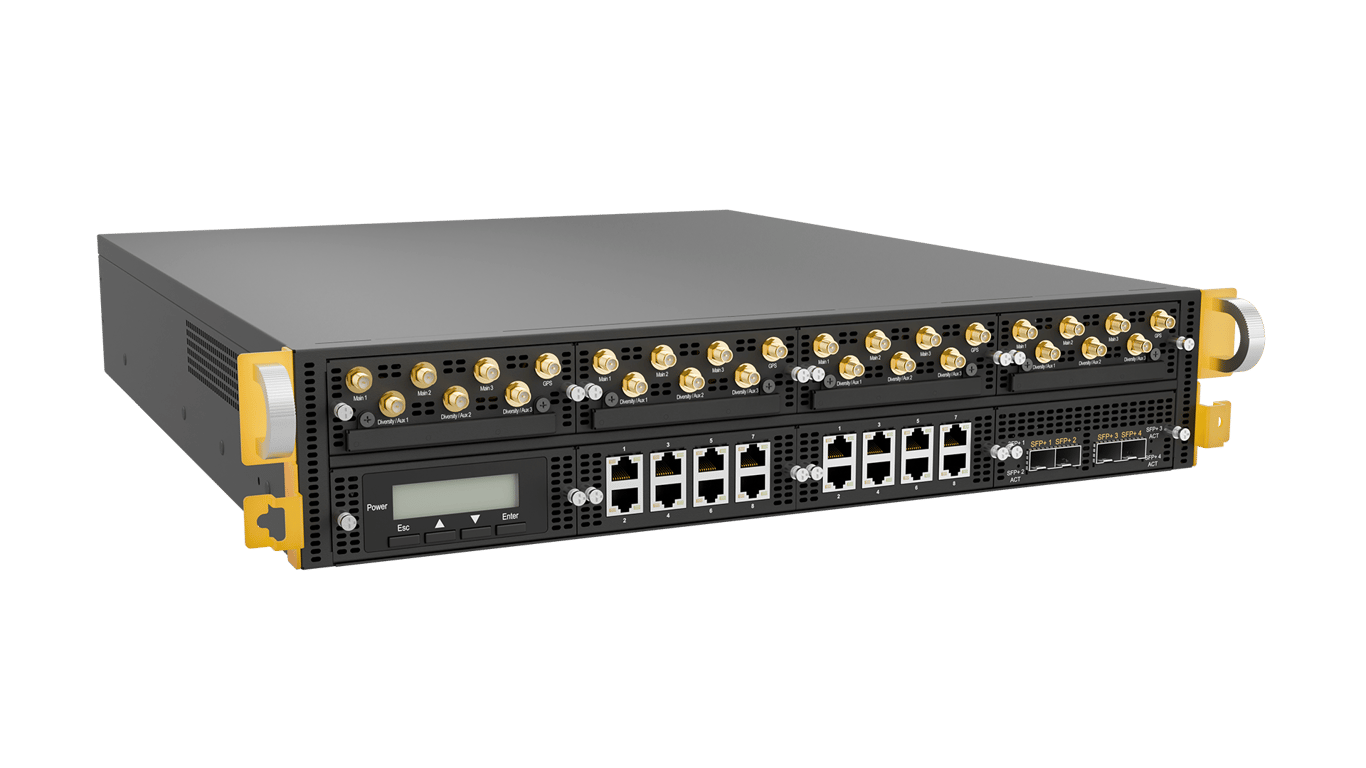
At the center of the new network is the EPX, deployed on-site to aggregate connections that previously ran separately. Eight Starlink connections connect into the EPX, and Peplink SpeedFusion bonds them into a single high-bandwidth connection, providing resilient, gigabit-level performance.
An on-premise FusionHub, set up by Peplink reseller MIMP Connecting Solutions, forms the SpeedFusion tunnel between the mine site and the wider network, acting as the VPN endpoint without requiring extra physical hardware. Vocus supplies the underlying Satellite-Starlink service that the EPX bonds across, giving the deployment both the bandwidth and the redundancy Heathgate Resources needed.
SpeedFusion's bonding keeps the connection running even if individual Starlink connections lose signal, redistributing traffic across the remaining operational links rather than switching to a single backup path. M2M Connectivity, Peplink's Australian distributor, coordinated the deployment with MIMP and Vocus to bring the three pieces together on-site.

The Result

Zero Connectivity Loss When the Tower Went Down

The bonded network delivers up to 1.3 Gbps download and 250 Mbps upload. That's 650 times the download capacity of the old 2 Mbps backup.
The real test came one month after installation. A fire broke out in the nearby Gammon Ranges and badly damaged the microwave tower Heathgate used as its primary link. The bonded Starlink connections took over. Production continued, the network stayed available, and workers on site stayed connected.
For Heathgate, the backup is no longer a thin safety net. It's a connection strong enough to run the whole mine.

Testimonials

This changes the landscape in Australian telecommunications. We can join multiple connection types together and present it to the customer as a single internet connection to use all the combined bandwidth at once.

Ashley Grove

Satellite Development Manager, Vocus

Previously, our redundant communication option was a limited 2Mb/s satellite link. During outages, business communications were restricted to essential safety and operational services. The bonded Vocus Satellite–Starlink service has significantly improved our situation, allowing the mine site to keep operating even in unforeseen circumstances.

Hugh Banister
CIO, Heathgate Resources
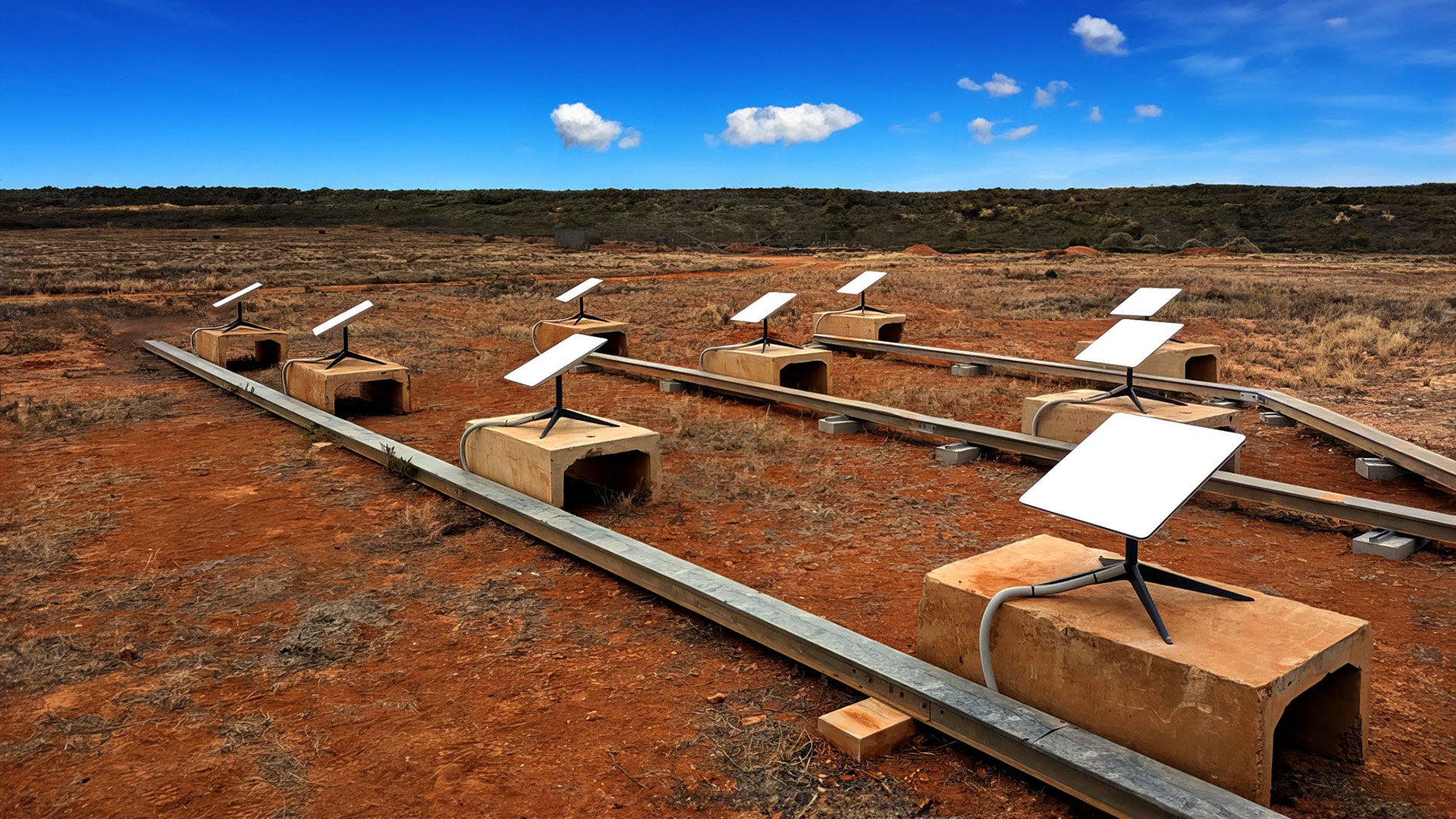
Eight Starlink terminals deployed at Heathgate Resources' mine site, bonded together to deliver satellite connectivity for mining sites.A worker at Heathgate Resources' mine site checks network status on a tablet.Aerial view of Heathgate Resources' remote uranium mine site in South Australia.

Deployment Architecture

Network diagram showing eight Starlink terminals bonded through a Peplink EPX and SpeedFusion to an on-premise FusionHub.Network diagram showing eight Starlink terminals bonded through a Peplink EPX and SpeedFusion to an on-premise FusionHub.

FAQs

Q1. How does satellite connectivity for mining sites keep a mine online when the primary link fails?
A.
With one small backup link, a site drops to whatever that link can carry. Heathgate's old 2 Mbps backup covered safety and essential operations only. By bonding multiple Starlink connections with Peplink SpeedFusion, the backup can carry the whole site. When fire damaged Heathgate's primary microwave tower, the bonded Starlink connections took over with no loss of production or connectivity.
Q2. How much bandwidth does a remote site need for both operations and workforce welfare?
A.
It depends on headcount and how much personal use you want to support alongside operational traffic. Heathgate's eight bonded Starlinks deliver up to 1.3 Gbps download and 250 Mbps upload for 250+ workers and site operations. A Peplink certified partner can size a deployment for your site.
Q3. Does bonding Starlink connections require new hardware if a site already has satellite backup?
A.
Sites with active Starlink connections can add bonding by connecting the satellite feeds directly into a SpeedFusion-enabled router on-site. The router creates a single bonded tunnel back to a physical or virtual appliance (such as FusionHub) deployed in a cloud or on-premise data center, aggregating total capacity without altering existing satellite equipment.
Q4. How does Peplink support connectivity for remote sites vulnerable to disruption?
A.
Peplink's SpeedFusion technology bonds multiple WAN connections, including LEO satellite links like Starlink, into one resilient connection, so traffic keeps flowing across the surviving links rather than switching to a single backup path.
Q5. How can organizations manage connectivity across remote sites?
A.
Centralized platforms like Peplink InControl allow IT teams to monitor connection health, manage firmware, and configure VPN tunnels across multiple remote locations from a single dashboard without sending technical personnel on-site.
Q6. Can Starlink be combined with other internet connections?
A.
Yes, Starlink can be combined with other internet connections (including cellular (LTE/5G), fixed wireless, microwave, or secondary satellite feeds) using multi-WAN bonding technology. Through technologies like Peplink SpeedFusion, individual connections are aggregated into a single logical network pipe rather than operating as independent failover links. This setup allows remote sites to draw on combined bandwidth while protecting against link degradation, instantly redistributing packets across remaining paths if a Starlink dish or primary link drops out.
Q7. What Peplink products are suitable for remote deployments?
A.
The right hardware for your site depends on your specific operational needs, such as your required bandwidth, total user count, environmental conditions, and available WAN connections. Peplink offers a wide range of enterprise and mobile routers built to support demanding remote deployments, from compact, ruggedized MAX series routers for harsh field conditions to modular enterprise appliances for heavy multi-link bonding.
Because every remote site brings its own unique challenges, the best way to find the right fit is to reach out to one of our Peplink certified partners or contact our team directly.

Next Steps

Looking for a Connectivity Solution?

Whether you're planning an event, a remote deployment, or a complex network, our team can help you find the right Peplink setup for the job.

Talk to a Specialist

Got a Peplink Deployment Story?

If you've built something impressive with Peplink, we want to hear about it. Share your project with us and we'll help turn it into a case study.

Share Your Story

Contact Us